
Research
Causality

Systems

Immunology
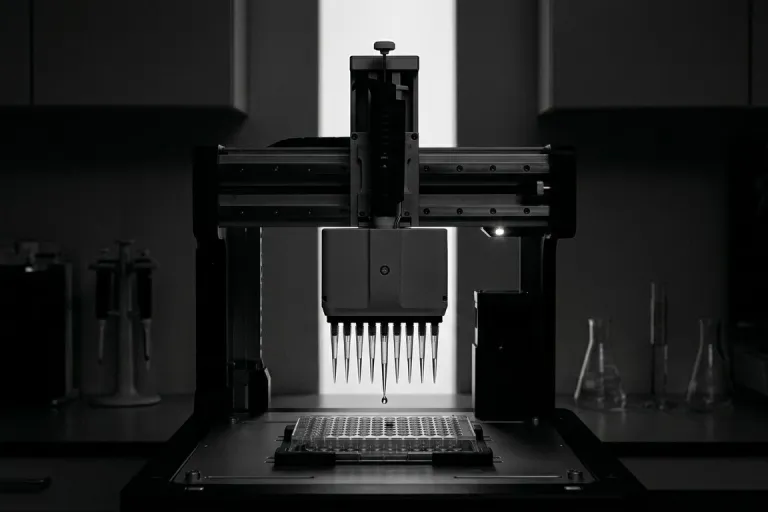
Our lab uses advanced probabilistic AI models to solve complex immunological puzzles
We focus on establishing causal links between genes and cell states. We apply key concepts from causal learning to go beyond correlations, and generate large-scale perturbational data where possible.
For this we use a systems perspective. Modern perturbational datasets give unique problems for inference and statistics, meaning we push the frontier of deep probabilistic models and amortization. Models are always validated in the lab; a true dream for any aspiring machine learner.
We apply this on urgent problems in immunology, such as immune cell homeostasis, inflammation and oncology.
Selected publications
Dissecting the impact of transcription factor dose on cell reprogramming heterogeneity using scTF-seq
Text
Liu W.*, Saelens W.*
Spatial proteogenomics reveals distinct and evolutionarily conserved hepatic macrophage niches
Text
Guilliams M. et al.
NicheNet: modeling intercellular communication by linking ligands to target genes
Text
Browaeys R., Saelens W., et al.
ChromatinHD connects single-cell DNA accessibility and conformation to gene expression through scale-adaptive machine learning
Text
Saelens W.et al.
A comparison of single-cell trajectory inference methods
Text
Saelens W., et al.